


How to Choose the Right Cleaning Product for Different Surfaces Without Damaging Them

How to Choose the Right Cleaning Product for Different Surfaces Without Damaging Them
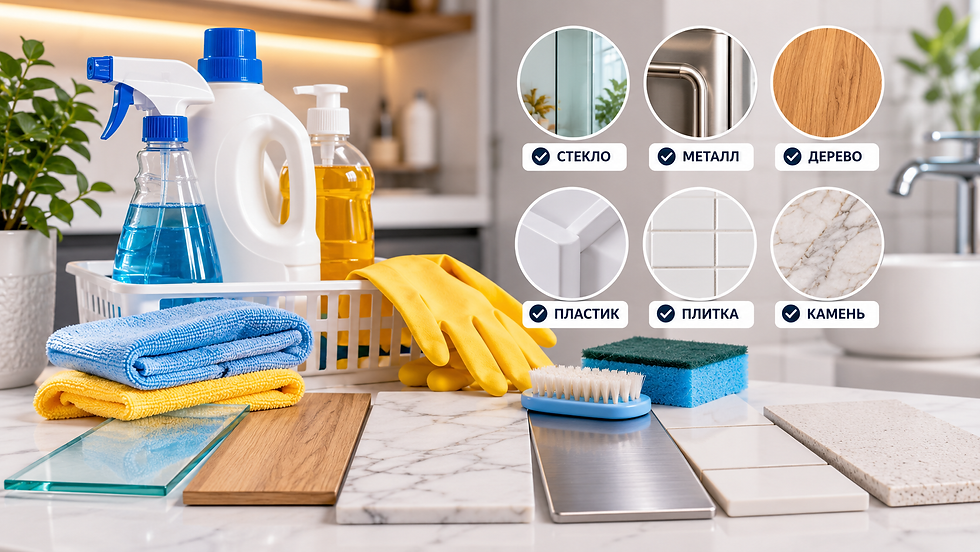
Sometimes it may seem that one strong cleaning product can be used for everything: tiles, sinks, tables, glass, plastic, or faucets. In practice, this is one of the most common ways surfaces get damaged.
One product may remove grease very well but damage wooden surfaces. Another may work effectively against limescale but leave marks on marble. A third may clean bathroom fixtures quickly but be unsuitable for stainless steel or plastic parts.
That is why the main rule is simple: choose a cleaning product not only by the type of dirt, but also by the material of the surface.
Why one product cannot be used for everything
Different surfaces react differently to cleaning chemicals. For example, ceramic tiles usually tolerate cleaning products quite well. Natural stone, wood, and some types of plastic, however, may be sensitive to acids, alkalis, solvents, or abrasive particles.
If the wrong product is used, the result can be unpleasant:
the surface may lose its shine;
stains or marks may appear;
the material may become dull;
plastic may turn yellow or develop small cracks;
metal may darken or develop small spots;
wood may swell or lose its protective layer.
Damage is often not visible immediately. Today, the surface may only look slightly dull. After a few weeks, it may become clear that it has lost its original appearance.
Glass and mirrors
Glass and mirrors should be cleaned with mild products that do not leave a film. Special glass cleaners, light alcohol-based products, or a weak solution of a mild detergent usually work well.
The biggest mistake is rubbing glass with abrasive powders, rough sponges, or metal scrapers. Small scratches may not be visible at first, but over time the glass can start to look cloudy.
For glass, the cleaning cloth is also important. Microfiber or a soft lint-free cloth is best. After cleaning, the surface should be wiped dry to avoid streaks.
Stainless steel
Stainless steel may look strong, but it still requires careful cleaning. This is especially true for kitchen sinks, faucets, household appliances, and decorative panels.
For daily cleaning, mild neutral products, soapy water, or dishwashing liquid diluted in water are suitable. After cleaning, it is better to wipe the metal dry with a soft cloth.
It is better to avoid:
chlorine-based products;
harsh abrasive powders;
metal brushes;
oven cleaners and strong alkaline products;
prolonged contact with acids.
Stainless steel should be wiped in the direction of the metal grain. This reduces the risk of visible marks and micro-scratches.
Wooden surfaces
Wood is one of the most sensitive materials. This is especially true for parquet, wooden countertops, furniture, and lacquered surfaces.
The biggest risks for wood are excess water and aggressive chemicals. If a wooden surface becomes too wet, it may swell, darken, or deform.
For care, it is better to use special wood cleaners or a very mild soapy solution. The cloth should be slightly damp, not wet. After cleaning, the surface should be wiped dry immediately.
Avoid using:
ammonia;
strong alkalis;
solvents;
abrasive powders;
too much water.
If you are not sure how a product will affect the surface, test it first on a small hidden area.
Plastic
There are many types of plastic. Some tolerate household cleaning products well, while others may become cloudy, yellow, or develop small cracks.
For regular cleaning, warm water and a mild detergent are usually enough. Neutral products, a weak soapy solution, or a small amount of dishwashing liquid are suitable.
The most dangerous products for plastic are strong solvents. For example, acetone can quickly damage the surface. Metal brushes and rough abrasives should also be avoided.
If white plastic has stains, there is no need to use strong chemicals immediately. Start with a mild product. If it does not help, try a stronger cleaner, but always test it first on a small area.
Ceramic tiles
Ceramic tiles are usually quite resistant. They can be cleaned with neutral and mildly alkaline products. For kitchens, products that remove grease are suitable. For bathrooms, cleaners against soap residue and limescale may be used.
However, there is one important point: the tile itself may be resistant, but the grout between tiles is often more sensitive. Strong acid or a hard brush can damage the grout.
For regular cleaning, it is better not to use aggressive products unless necessary. If the dirt is ordinary, a mild universal cleaner is usually enough. Acidic cleaners should be used only where there is real limescale buildup.
Natural stone: marble, granite, limestone
Natural stone requires special care. Marble and limestone do not tolerate acids well. Even ordinary citric acid or vinegar can leave a dull mark on the surface.
For such surfaces, it is better to choose special stone cleaners or neutral products with a pH close to 7. The milder the product, the lower the risk of damaging the polish and shine.
Avoid using:
vinegar;
citric acid;
strong acids;
strong alkalis;
abrasive powders;
metal sponges.
Granite may be more resistant than marble, but that does not mean it can be cleaned with anything. If the surface is polished, aggressive chemicals can still damage its shine.
Bathroom fixtures: toilets, sinks, bathtubs
Sanitary porcelain and ceramic fixtures usually tolerate bathroom and toilet cleaning products quite well. Acidic products are used to remove limescale, while special products are used for disinfection.
But there are limits here as well. Strong products should not be left on the surface longer than stated in the instructions. It is also not a good idea to constantly scrub the surface with harsh abrasives. Over time, the glaze may become rough, and dirt will stick to it even faster.
Bathtubs require special attention. Acrylic bathtubs cannot be cleaned in the same way as ceramic sinks. Acrylic requires mild products without abrasives or strong solvents.
Common mistakes
The first mistake is choosing the strongest product “just in case.” Stronger does not always mean better. Sometimes a mild product and the correct contact time are enough.
The second mistake is mixing different products. For example, acidic cleaners must not be mixed with chlorine-based cleaners. This can be dangerous to health.
The third mistake is not reading the instructions. Manufacturers usually indicate which surfaces the product is suitable for, how to dilute it, and how long it should remain on the surface.
The fourth mistake is applying the product immediately to a visible area. It is safer to test it first on a small hidden spot.
The fifth mistake is not rinsing off product residue. Even a mild cleaning product, if left on the surface for too long, can leave marks or damage the material.
A simple rule for choosing a cleaner
Before buying or using a cleaning product, ask yourself three questions:
What type of surface is this?
What kind of dirt needs to be removed?
Is this product suitable for this exact material?
If you need to remove grease, alkaline or mildly alkaline products often help. If you need to remove limescale, acidic products are usually required. If the surface is delicate, it is better to choose a neutral cleaner.
Most importantly, do not rush. It is safer to start with a milder product than to damage the surface with aggressive chemicals.
Conclusion
Good cleaning is not only about making things clean. It is also about preserving the surface. A universal cleaner may be convenient, but it is not always safe for every material.
Glass needs mild products without abrasives. Stainless steel requires cleaners without chlorine or hard particles. Wood needs minimal water and neutral care. Plastic should be protected from strong solvents. Natural stone requires gentle products. Bathroom fixtures should be cleaned only with suitable products and strictly according to the instructions.
The safest approach is to read the label, avoid mixing cleaning chemicals, follow the correct dosage, and always test the product on a small hidden area first. It takes only a few minutes, but it helps prevent damage that may be difficult to repair later.


Comments